Medication management is just working with a healthcare professional to make sure your mental health medications are working well. Your provider will help you find the right medicine, the right dose, and the right time to take it. They’ll also check in on you regularly to see how you are feeling and help manage any side effects.
A big part of feeling your best is taking the right medication in the right way. For conditions such as depression, anxiety, ADHD, or bipolar disorder, the right medicine helps balance your brain. This not only simplifies daily life but also enhances the effectiveness of other treatments, such as talk therapy. If you don’t have this balance, your symptoms may not improve, and they may even get worse.
However, many individuals endure their struggles in silence. You might be on medication and still feel “off” or be struggling with frustrating side effects. You might even wonder if you need a doctor to help you keep track of all that.
In this article, we’ll break down exactly what medication management looks like and how to determine if you might benefit from it. We will also provide you with an overview of what to expect at your doctor’s appointments and offer practical tips to maximize the benefits of your treatment. If you’ve been wondering whether your current medication regimen is genuinely beneficial, you’ve found the right place.
Table of Contents
What Is Medication Management in Mental Health?
What it means
Medication management is not just getting a prescription. This is a never-ending process. You work directly with a healthcare provider to make sure your mental health medicine is working. They will monitor how the medication affects your mood, sleep, and everyday life, as well as any unwanted side effects. Our mission is simple: to keep you safe and help you feel your best.
Who provides it?
Professionals who are trained to safely prescribe and manage mental health treatments include:
- Psychiatrists: Doctors who specialize in mental health.
- Primary care doctors: Your regular doctor, who can often help with milder or stable conditions.
- Specialized nurses and assistants: Psychiatric nurse practitioners or physician assistants with specific mental health training.
Why is it important?
Mental health medication can be dangerous if not used correctly. If you don’t have a professional to help you, you could take the wrong dose, mix it with unsafe supplements, or stop taking it too suddenly, which can make you feel a lot worse. Good medication management prevents bad reactions, makes sure your treatment works, and helps you live a healthier, happier life.
Common Mental Health Conditions That May Require Medication Management
Medication management is working with a qualified healthcare provider to ensure mental health medications are safe, effective, and adjusted as needed.
It can help people living with conditions such as the following:
- Depression
- Anxiety disorders, including generalized anxiety disorder, panic disorder, and social anxiety disorder
- Bipolar disorder
- ADHD
- Schizophrenia and other psychotic disorders
- PTSD
This kind of support can be particularly helpful for a long-term or more complex condition, where symptoms might be variable or more than one medication is being used.
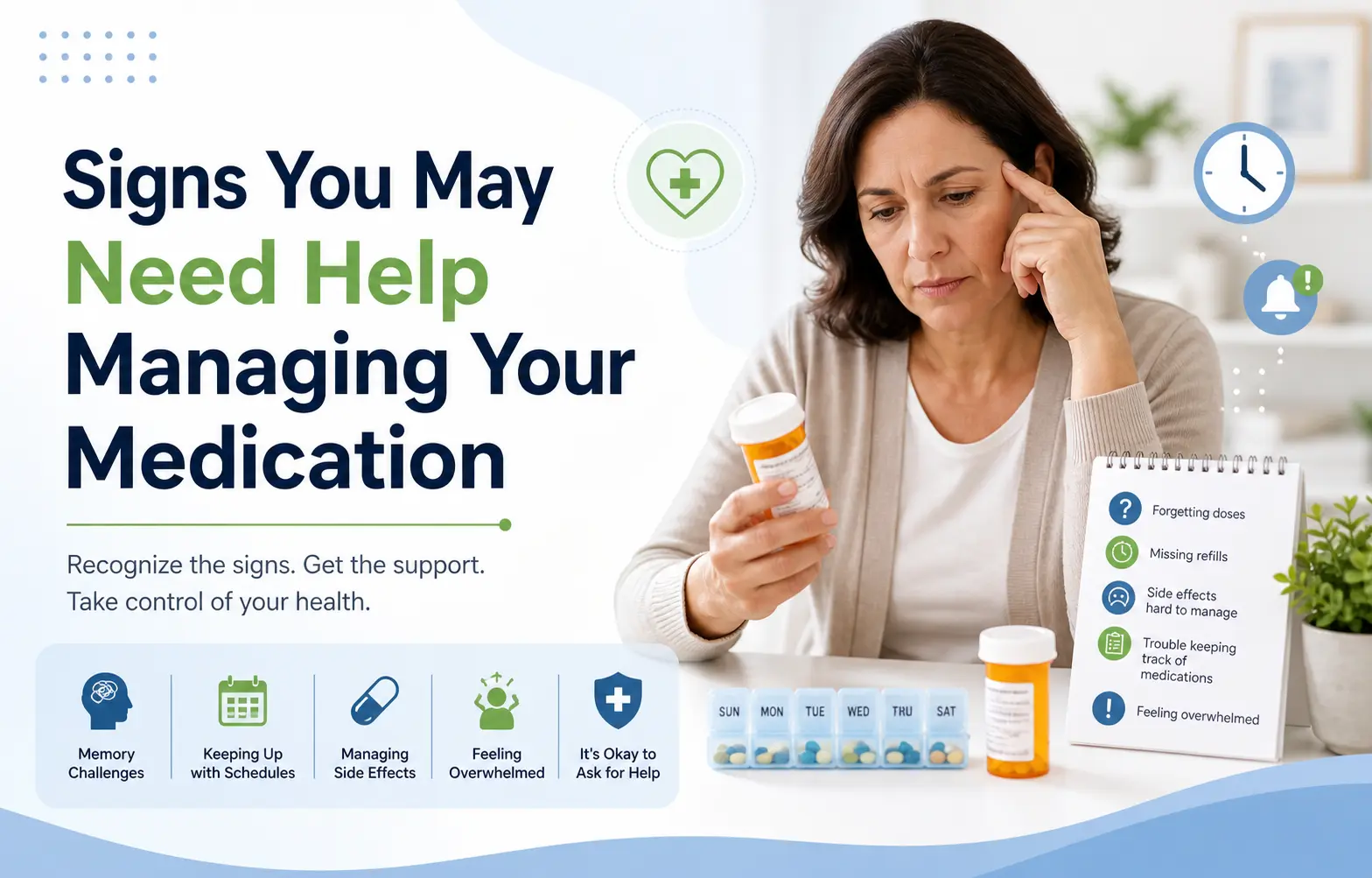
10 Signs You Might Need Medication Management
Medication management is working with a healthcare professional to ensure your daily medications are safe and effective. Here are some key indicators that you may benefit from this support:
1. Your symptoms aren’t going away: You have been on your medication for a while, but you are still feeling anxious, depressed, or unwell.
2. You have bad side effects: The medicine makes you sick, tired, dizzy, or emotionally numb. A professional can change your dose or try a different pill.
3. You take many pills: It can be confusing to take multiple medications. A professional will check that your medicines are safe to take together.
4. You forget to take your medicine: Medication management can help you establish a much easier routine if you miss doses due to a busy schedule.
5. Your health or life has changed: Big life stress, new health problems, or just getting older can change how your medicines work in your body.
6. You change your doses: It is dangerous to skip pills or to take more pills than prescribed without asking a doctor. A professional can help you make safe adjustments to your plan.
7. You feel “numb” or still struggle: If you feel like a “zombie” or your symptoms are still too strong, your medication needs to be rebalanced.
8. You have other health problems: If you have a physical illness or pain as well as mental health problems, a professional will help make sure that all your treatments are safe to use together.
9. You just started a new medicine: The first few weeks of a new pill are critical. A professional is available to ensure that the new medicine is actually benefiting you.
10. You want a better plan: You want to know your options, and you want a clear, personal plan to help you feel your best.
Why Professional Medication Management Helps
A professional can greatly assist you in managing your medication. When done properly, it helps you by:
- Keeping your symptoms under control and balancing your mood
- Lowering the chance of uncomfortable side effects
- Creating a personal care plan that changes as your needs change
- Giving you the support and knowledge you need to take your medicine correctly
- Improving your daily life so you have more energy for work, hobbies, and the people you love
Remember, taking your medicine is part of therapy, not a substitute.
What to Expect During a Medication Management Appointment
Your First Visit
Your doctor will want to know about your general health, your current symptoms, and what medicines or vitamins you are taking. This is a good time to talk honestly about how you are feeling and whether your current treatments are really working for you.
Regular Check-Ins
Your doctor will check for side effects and see if your medicine is working well at follow-up visits. Based on how you are feeling, they may change your dose or give you a different medicine.
Working Together
You and your provider are a team. You’ll always have a safe and supportive space to ask questions, discuss your concerns, and learn exactly how your prescriptions work.
Tips to Help Your Medicine Work Best For You
- Track your progress: Record when you take your medicine, how you are feeling, how you sleep, and any side effects. Show this to your doctor when you go see them.
- Tell the truth: Share anything with your doctor, no matter how awkward it feels. They have to know exactly how you’re doing to help you.
- Follow directions: Take your medicine exactly as instructed. If you don’t know something, just ask.
- Ask questions: Learn what to expect, when you’ll start to feel better, and what bad signs to watch out for.
- Keep your appointments: Seeing your doctor regularly helps make sure your medicine is working well for you.
When to Get Emergency Help with Your Medication
Recognizing the need for immediate assistance is crucial for the safe management of your medication. Please contact your doctor or visit the emergency room immediately if you experience:
- Severe side effects, such as an allergic reaction, deep confusion, or body movements you cannot control.
- Thoughts of hurting yourself.
- Mental health symptoms that quickly get much worse.
- You may experience sudden and significant changes in your behavior.
Please do not wait. Help is always available, day or night, by calling a 24/7 crisis line or emergency services.
Frequently Asked Questions (FAQ)
Do I need medication management if I feel okay?
Yes, preventive monitoring can help you identify problems early, improve your current plan, and ensure long-term stability, even when everything appears to be under control.
How often should I have medication reviews?
It depends, but generally every few weeks when starting or adjusting, then every 1–3 months or longer when stable. Your provider will work out a schedule that works best for you.
Can medication management replace therapy?
No. It works best with therapy, lifestyle changes, and support. Medication can help to reduce symptoms so that you can engage more fully in other healing work, such as therapy, lifestyle changes, and support systems that contribute to overall well-being.
Managing medications is not a failure. It’s a smart, proactive move to help you feel better and live more fully. If you identify with multiple signs, it may be beneficial to contact a qualified mental health provider. You need caring that actually supports your special journey.




No comment