
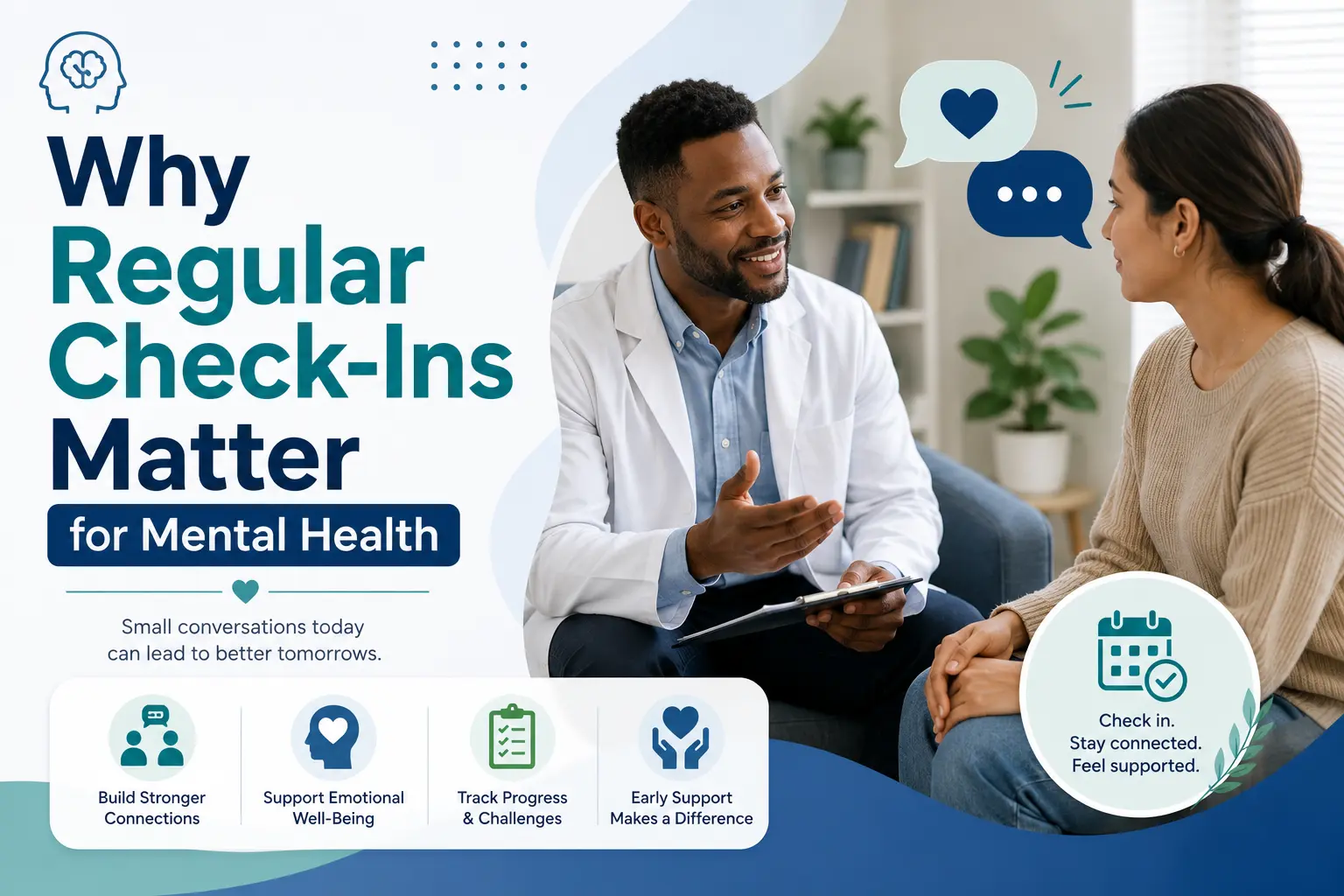
Think about it: starting a workout program with a trainer, seeing outstanding results quickly, then quitting because you feel “good enough.” Soon, old habits come back, and you lose your progress. Mental health care is not much different.
Almost 1 in 5 adults in the U.S. experiences a mental health challenge each year. But many people stop getting help too early. It is very typical for people to cease attending appointments after a handful of visits or a hospital stay. Often, it’s regular check-ins – like talking to your doctor, seeing a therapist, or looking at your medication- that make the difference between feeling better for a bit and staying well long-term.
This post will cover what these check-ins are, why they’re important, their benefits, and how to overcome common obstacles to attending. Whether you’re focusing on your own mental health, assisting a loved one, or working in the field, you’ll discover practical tips that you can immediately implement. Regular care is not only helpful, but it’s also one of the best ways to stay strong and live a better life.
Table of Contents
What Are Follow-Ups in Mental Health Care?
Follow-up in mental health care is the planned visit that happens after your first appointment or after a mental health emergency. These check-ins keep your treatment on track, allow your provider to make adjustments, and provide you with ongoing support as your life changes.
Types of Follow-Up Visits
These appointments can happen in a few different ways:
- Medicine check-ins: These are to check for any side effects, see how your medicine is doing, and change your dose or prescription when needed.
- Talk therapy: These are proven methods of counseling sessions to help you develop healthy habits, handle stress, and process your feelings.
- Care team meetings: Your doctors, therapists, and social workers collaborate during these visits to ensure comprehensive support for your health.
- Video calls vs. in-person visits: Both options work well. “Sometimes video or phone calls make it easier to get to appointments, and sometimes sitting in the same room makes people feel more connected.
The difference between your first appointment and a follow-up visit is one of objectives. Your first visit is about finding out what is going on and making a plan. Follow-ups are used to monitor progress, resolve any issues that may arise, and adapt the plan to fit into your daily routine.
It depends on how you’re feeling and how often you go. If you’re experiencing severe symptoms or difficulties, you may need to visit your provider once or twice a week. If you’re doing well and feeling stable, you might only need to check in every few months. Your provider will work with you to establish a schedule that works for you.
Why Regular Check-Ins Matter: The Evidence
The evidence is unequivocal: maintaining consistency yields positive outcomes.
Better Results and Symptom Control
Regular check-ins can help to identify warning signs, side effects from medication, or new stressors earlier. Your care team can quickly make adjustments, like changing a dose or suggesting new ways to cope, before small problems get bigger. That means you get better with fewer setbacks.
Lower Chance of Hospital Visits and Crises
Research indicates that seeing a doctor soon after leaving the hospital dramatically reduces the chances of returning. If people with mental health problems do not get ongoing care, they are much more likely to end up in crisis. Regular appointments serve as a safety net, allowing for early detection of problems.
Better Long-Term Healing and Quality of Life
The more regular visits and following a care plan, the longer you feel well. Those who actively manage their care find it easier to handle daily tasks, cultivate stronger relationships, and derive greater enjoyment from life. It also saves you and the healthcare system money by avoiding expensive emergency room visits and hospital stays.
Key Benefits of Consistent Mental Health Follow-Ups
Beyond the numbers, here’s what regular care delivers in everyday life:
- Personalized care adjustments: Your mental health can change over time. What works in January may need to be tweaked come April, thanks to seasonal changes, life events, or new stressors. Scheduled check-ins help keep your care plan on track.
- Stronger connection and trust: A positive relationship with a professional you see regularly. You feel safer to open up, which results in deeper, more effective healing.
- Professionals are considering: More than just your primary symptoms. They also examine your sleep, daily habits, physical health, and personal support systems.
- Keeping treatments effective: Detecting problems early could prevent your medicines or therapies from becoming less effective over time.
- Support for overlapping issues: Anxiety and depression often come together, and so do past trauma and substance use. Regular visits ensure every part of your well-being gets the attention it needs.
Mental Health Conditions That Benefit Most from Regular Follow-Ups
Almost every mental health condition benefits from regular appointments, but some especially so:
- Depression and anxiety: Regular check-ins help prevent symptoms from coming back, which is common if treatment is stopped too early. Little changes to your therapy or medication help keep your mood stable.
- Bipolar and mood disorders: Watch out for wild mood swings. Regular visits help your doctors catch intense highs and lows early so they can alter your medications.
- Schizophrenia and related conditions: It can be difficult to follow a treatment plan for some of these patients, so ongoing support and medication reviews are very important in helping to keep people out of the hospital.
- PTSD and trauma: Continued therapy gives people the opportunity to slowly work through their past trauma and learn how to better cope with situations that trigger bad memories.
- ADHD and related conditions: Regular check-ups help make sure that medications are working, manage any side effects, and allow you to adjust your approach to work, school, or relationships.
- Eating disorders and OCD: Such challenges often require ongoing practice and support. Regular therapy sessions help to lock in good habits and catch small setbacks early.
All of these conditions benefit from regular check-ins that help to prevent sudden setbacks, make day-to-day living easier, and promote better long-term health.
Common Reasons People Miss Regular Follow-Ups — and How to Get Past Them
It’s normal to have challenges. The first step is to see what’s in the way.
Stigma, Cost, and Trouble Getting Care
Some people are concerned about being labeled or judged. Others are put off by the cost, insurance coverage, long wait times, or lack of providers near home.
What can help: Locate low-cost clinics, community mental health centers, or telehealth services. It takes strength to ask for help. Talking openly with trusted friends or family members can also help reduce shame.
Side Effects and Feeling Like Nothing Is Changing
Sometimes there are side effects of medication. But sometimes it can feel like progress is slow or difficult to see.
What can help: Be honest with your health care provider. You can change the treatment. Keeping a journal of small improvements can help you see progress over time.
Busy Schedules and Low Motivation
Life is busy. Low motivation, especially in depression, can make appointments difficult to keep.
What can help: Consider appointments as crucial health visits that you cannot afford to miss. Schedule reminders, plan a small reward afterwards, or ask about evening or weekend appointments. Having someone check in on you and hold you accountable can also be helpful.
How to Get the Most Out of Your Mental Health Check-Ins
For Patients: How to Prepare
- Keep track of how you feel: Keep a list of your mood, sleep, and how your medicine makes you feel. It can be a phone app or even a simple notebook. Keep track of your energy levels and the things that affect your mood.
- Questions to ask your doctor or therapist: “Does this medicine work well?” “What changes should I make in my daily life to feel better?” “Is there anything new I should be trying?”
- Set clear goals: For example, “I want to sleep better” or “I want to deal with work stress better.” Clear goals make your visits more useful.
Be honest (even if it’s a little embarrassing!) and come to your visit ready to share any updates.
For Doctors and Therapists: How to Give the Best Care
Be kind, work as a team, and build trust. Use simple checklists or questionnaires to monitor the patient’s progress. If the patient is agreeable, involve their family for further support. Make sure to communicate with the patient’s other physicians. Celebrate every step forward, however small.
Friends and family are very important. They can help by encouraging the person to attend their visits, offering transportation, or simply listening without judgment.
How Technology is Changing Mental Health Check-Ins
Technology makes it much easier to get the support you need:
- Video calls and online appointments mean you don’t have to travel to a clinic, and getting help can feel more private and comfortable.
- Phone apps make it simple to record how you feel every day, giving you and your doctor helpful information to talk about during your visits.
- Smartwatches can track your sleep and heart rate, providing real facts about how your body is doing.
- Smart computer programs can notice changes in your mood early on. While they are helpful tools, they don’t replace real doctors or therapists.
These options facilitate the management of care, particularly for individuals residing far from a clinic or facing mobility challenges. There are some downsides, such as privacy concerns or not having a smartphone or internet access, but these tools are making a big difference in mental health care.
Making a Care Plan You Can Stick To
How to build a plan that lasts:
1. Work with your doctor or counselor to set a schedule that makes sense for you right now.
2. Start by going more often when things are hard, and then go less often (like every 2 to 3 months) as you start to feel better.
3. Look out for signs that you might need extra help, such as feeling worse, going through big life changes, or having trouble sleeping or eating.
4. Fit your check-ins into your daily routine. Try planning your appointments around a walk, seeing a friend, or doing something enjoyable for yourself.
5. Check your plan every so often. As you start doing better, you might not need to see your doctor as much.
Something is appealing about you and your doctor deciding that it’s time to graduate from frequent visits to occasional check-ins. However, it’s important to have a contingency plan for difficult days.
Regular mental health check-ins aren’t about leaning on anyone else; they’re just a way of looking after your future self. When life gets tough, they offer advice, guidance, and a helping hand. If you or someone you love has missed a few visits recently, consider this a friendly reminder to get in touch with us and book your next appointment.
Small, consistent steps lead to the most significant changes. It’s time well spent to take care of your mental health, and you deserve to feel supported along the way.




No comment