
Medically reviewed by Ben Ekwe, PhD, PMHNP-BC
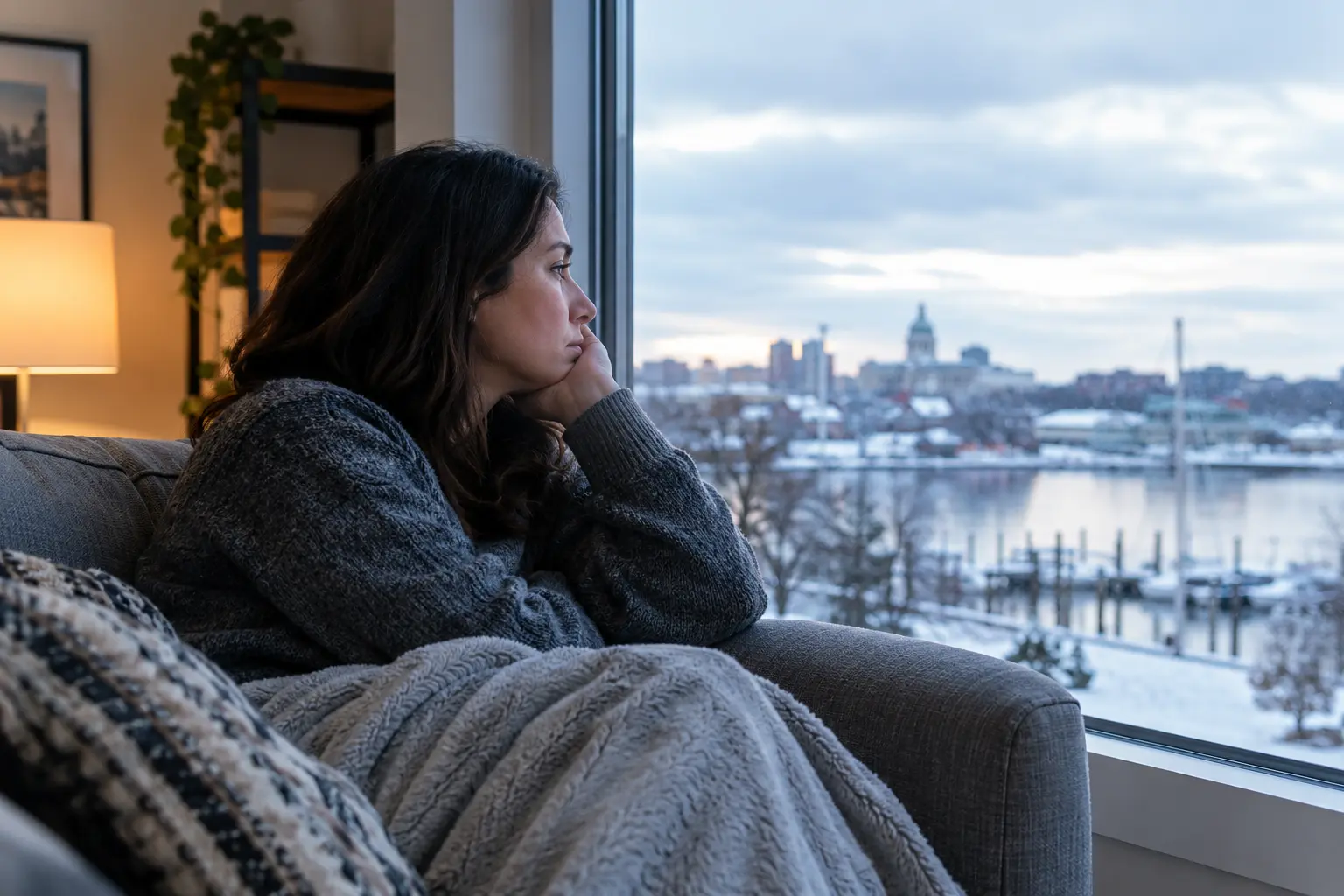
Seasonal depression is a real, treatable type of depression that comes back at the same time each year, usually in late fall and winter. If your mood, energy, and sleep slide every year once the days get shorter, it may be more than the winter blues.
Here in Maryland and Washington DC, the clocks fall back on Sunday, November 1. By December, the sun sets before 5 PM. Many people leave for work in the dark and drive home in the dark.
For most of us, that’s just annoying. For some, it sets off weeks or months of low mood that’s hard to shake. This guide covers how to tell the difference, what causes it, and what actually helps.
Table of Contents
What is seasonal depression?
The clinical name is seasonal affective disorder, or SAD. It’s a form of depression with a seasonal pattern. According to the National Institute of Mental Health (NIMH), symptoms usually last about four to five months out of the year.
The most common type starts in late fall or early winter and lifts in spring. This is often called winter depression. A less common type follows the opposite pattern and shows up in summer.
SAD isn’t a separate illness from depression. It’s depression that follows the calendar. That matters, because it means the same proven treatments can help.
Winter blues vs. seasonal depression
Almost everyone feels a little flat in January. Less sunlight, colder weather, and fewer reasons to go outside can drag anyone down for a few days.
Seasonal depression is different in three ways:
- It lasts. The low mood sticks around most of the day, nearly every day, for weeks.
- It gets in the way. It affects your work, your relationships, or your ability to keep up with daily life.
- It comes back. It returns around the same time each year.
It’s also not the same as holiday stress. NIMH points out that SAD is tied to changes in daylight, not to the stress of family visits, shopping, or year-end deadlines. Holiday stress usually fades in January. SAD often doesn’t lift until spring.
Common signs of seasonal depression
Seasonal depression shares the core symptoms of depression, including:
- Feeling sad, empty, or hopeless most of the day
- Losing interest in things you used to enjoy
- Low energy and feeling slowed down
- Trouble concentrating or making decisions
- Feeling guilty or worthless
- Thoughts of death or not wanting to live
Winter-pattern SAD often adds a few signs of its own:
- Oversleeping, yet still feeling tired
- Craving carbs and eating more than usual
- Weight gain
- Pulling away from people, almost like hibernating
You don’t need every symptom on this list. And if you’re not sure whether what you feel is depression or just sadness, our post on how depression differs from sadness walks through it in more detail.
What causes seasonal depression?
Researchers are still working out the full picture, but a few things seem to play a part.
Less sunlight affects brain chemistry. NIMH notes that people with winter-pattern SAD tend to have lower serotonin activity, and shorter days may make it harder for the brain to keep serotonin levels steady.
Your sleep hormone gets out of sync. People with winter SAD may produce too much melatonin, the hormone that makes you sleepy. That can explain the oversleeping and the heavy, sluggish feeling.
Your internal clock shifts. The Mayo Clinic explains that reduced light can throw off your circadian rhythm, the internal clock that guides sleep, energy, and mood.
Vitamin D may drop. Your skin makes vitamin D from sunlight. Less sun in winter can mean lower levels, which may add to the problem.
Who is more likely to get it?
Anyone can develop seasonal depression, but some people are at higher risk:
- Women, who are diagnosed more often than men
- Young adults, since it usually starts in early adulthood
- People who live farther from the equator, where winter days are shorter
- People with a family history of depression
- People who already have depression or bipolar disorder
That last point deserves attention. Mood shifts tied to the seasons can be part of bipolar disorder, sometimes with low moods in winter and elevated moods in spring or summer. A careful evaluation helps make sure you get the right diagnosis and the right treatment.
How seasonal depression is diagnosed
There’s no lab test for SAD. A provider will ask about your symptoms, when they start and stop, and how they affect your life. You may fill out a short questionnaire.
Per NIMH, a diagnosis usually means your depressive episodes have followed a seasonal pattern for at least two years in a row. Your provider will also want to rule out other causes, such as thyroid problems or medication side effects.
Treatments that help
The good news: seasonal depression responds well to treatment. Options can be used alone or together.
Light therapy
Light therapy has been used for winter depression since the 1980s. You sit near a special light box for about 30 to 45 minutes each morning, usually from fall through spring. NIMH notes these boxes give off about 10,000 lux, roughly 20 times brighter than normal indoor lighting, and filter out UV light.
Talk to a provider before you start. Light therapy isn’t right for everyone, including people with certain eye conditions, people taking medications that increase light sensitivity, and some people with bipolar disorder.
Talk therapy
Cognitive behavioral therapy (CBT) helps you notice and change the thoughts and habits that keep depression going. A version adapted for SAD, called CBT-SAD, focuses on negative thoughts about winter and on planning activities you actually enjoy.
In studies cited by NIMH, CBT-SAD worked about as well as light therapy, and its benefits seemed to last longer over the following winter.
Medication
Antidepressants can help, either alone or alongside therapy. They usually take four to eight weeks to reach full effect, and sleep and energy often improve before mood does.
For people whose depression returns every winter, a provider may suggest starting medication in early fall, before symptoms hit. Our post on evidence-based medication management explains how we choose and adjust medications.
Vitamin D
Some people with SAD have low vitamin D, and supplements may help. The research is mixed, though, so check your levels and talk to your provider before adding a supplement. Vitamin D can interact with some medications.
Small habits that make winter easier
These aren’t a replacement for treatment, but they can take the edge off:
- Get outside early. A short walk in morning daylight, even when it’s cloudy, gives you more light than you’d get indoors.
- Sit near windows at work and at home.
- Keep a steady sleep schedule, even on weekends. Oversleeping can make the fog worse.
- Move your body. A workout, a walk at the mall, anything that gets you up.
- Plan things to look forward to. A standing coffee with a friend, a class, a weekend outing. Put them on the calendar before you have the chance to cancel.
- Watch the alcohol. It can deepen low mood and disrupt sleep. If sleep is already a struggle, it’s worth paying extra attention.
When to get help
It’s time to reach out if:
- You’ve felt down for more than two weeks
- You can’t get motivated to do things you normally enjoy
- Your sleep or appetite has changed noticeably
- Work, school, or relationships are starting to suffer
- You’re using alcohol to cope
- This happens every year, and you’re tired of just waiting for spring
If you’re still not sure, our guide on when to seek help for anxiety or depression can help you decide.
If you’re having thoughts of suicide or self-harm, please don’t wait. Call or text 988 to reach the 988 Suicide & Crisis Lifeline, available 24/7. In an emergency, call 911.
Getting care in Maryland and Washington DC
Winter is exactly when it’s hardest to get yourself to an appointment. That’s why we offer telehealth visits across Maryland and Washington DC. You can meet with your provider by secure video from home, no driving in the dark required.
If you prefer to come in, our office is in Lanham, just off Greenbelt Road.
At Balanced Life Behavioral Health, Dr. Ben Ekwe, PhD, PMHNP-BC, brings more than 20 years of behavioral health experience. He’ll listen, help figure out what’s going on, and build a plan with you, whether that includes medication, therapy, light therapy, or a mix.
We accept most insurance plans, including Maryland Medicaid, Medicare, CareFirst BlueCross BlueShield, and Tricare. We’re open 11 AM to 5 PM.
And if your low mood comes back every year, the best time to start is now, before winter fully sets in.
Book an appointment or call (240) 791-6150.
Frequently asked questions
Is seasonal depression a real diagnosis?
Yes. It’s a recognized form of depression with a seasonal pattern, often called seasonal affective disorder (SAD). It’s diagnosed and treated like other types of depression.
When does seasonal depression start?
For most people, symptoms start in late fall or early winter and ease in spring. In Maryland and DC, many people notice changes after the clocks fall back in early November.
Do light therapy lamps work?
For many people with winter-pattern SAD, yes. A light box of about 10,000 lux, used for 30 to 45 minutes in the morning, is a standard treatment. Check with a provider first, especially if you have bipolar disorder, an eye condition, or take medications that increase light sensitivity.
Can I be treated for seasonal depression through telehealth?
Yes. Evaluation, therapy, and medication management can all happen by secure video. We see patients by telehealth anywhere in Maryland and Washington DC.
Can seasonal depression be prevented?
There’s no guaranteed way to prevent it. But if you know it comes back every year, starting treatment before symptoms begin may help keep them milder. Talk with your provider about timing.
This article is for general education and isn’t a substitute for professional medical advice. If you have concerns about your mental health, please talk with a qualified provider.
Sources
Every clinical fact in the post comes from these pages. They’re paraphrased, not copied.
- National Institute of Mental Health: Seasonal Affective Disorder (NIH Publication No. 23-MH-8138, revised 2023). Used for: symptom duration, winter vs. summer pattern, holiday blues distinction, risk factors, causes (serotonin, melatonin, vitamin D), two-year diagnosis pattern, light therapy (10,000 lux, 30 to 45 minutes), CBT-SAD results, antidepressant timeline, vitamin D evidence.
- Mayo Clinic: Seasonal affective disorder, symptoms and causes. Used for: circadian rhythm explanation, seasonal mood shifts in bipolar disorder, when to see a provider, risk factors.
- 988 Suicide & Crisis Lifeline. Crisis resource.




No comment