If you wake up with a heavy fog hanging over your life, your daily tasks seem insurmountable, and happiness feels far away, then it could be more than a rough day.
Depression is a very common mental health issue. The World Health Organization estimates that 5.7% of adults worldwide have depression, with women affected at higher rates. This means hundreds of millions of people endure these struggles every day.
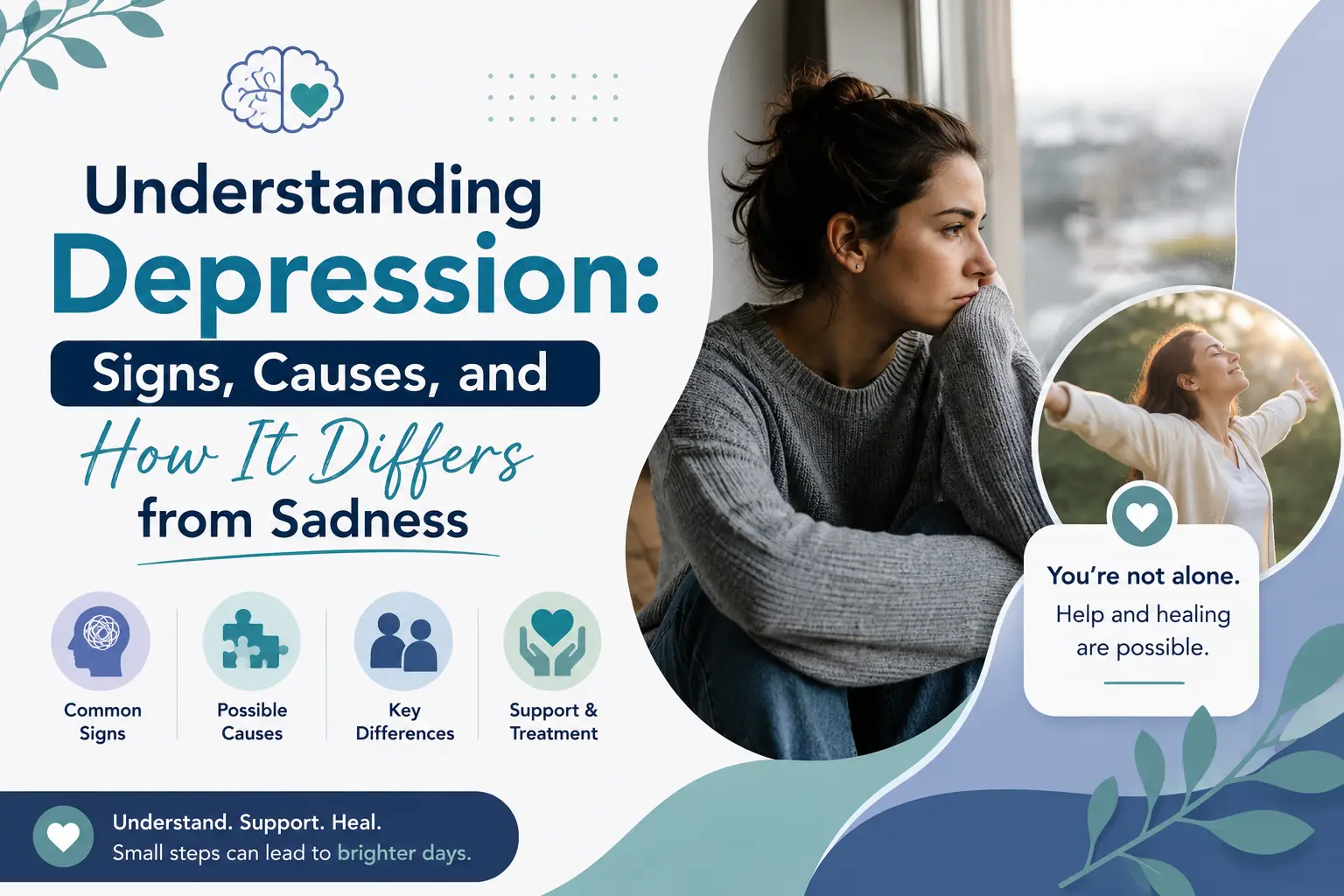
Many people, however, mistake ordinary sadness for clinical depression. Both are conditions where you feel down, but they are not the same. This article will discuss what depression really is, its noticeable symptoms, causes, and available treatments. Whether you’re seeking help for yourself or someone else, this guide will help you understand and take practical steps to look after your mental health.
Table of Contents
What Is Depression?
Depression is a serious medical condition that affects how you feel, think, and function in your day-to-day activities. More than just a bad week, it can disrupt your entire life.
Symptoms usually last for two weeks or longer and make it challenging for you to work, socialize, or take care of yourself. They often interfere with your sleep, appetite, energy, and ability to concentrate. Depression is not a weakness or a phase. It’s a real health problem that needs understanding and proper treatment.
Depression is one of the leading causes of disability worldwide, and understanding it as a medical condition is essential to reducing stigma and prompting people to seek the help they need.
Sadness vs. Depression: Key Differences
Sadness is a common human emotion, but it’s crucial to recognize when these feelings become excessive and require professional assistance.
Normal Sadness
- Event-driven: Triggered by specific life events, such as a breakup or losing a job.
- Proportional: The intensity of the emotion matches the situation.
- Temporary: Fades over time with self-care, support, or improved circumstances.
- Manageable: You can still function at work and maintain relationships, even if you feel down.
Clinical Depression
- Unpredictable: Often lacks a clear trigger or feels disproportionate to life events.
- Persistent: Lasts constantly for weeks, months, or longer.
- Disruptive: Negatively impacts sleep, appetite, energy levels, concentration, and self-worth.
- Severe: Can include physical symptoms, cognitive issues, and in severe cases, thoughts of self-harm or suicide.
Here’s a helpful comparison:
| Aspect | Sadness | Depression |
| Duration | Temporary, days to a couple weeks | Persistent (2+ weeks, often longer) |
| Triggers | Specific event or stressor | May occur without clear cause |
| Intensity | Proportional to event | Often intense and pervasive |
| Impact on Functioning | Mild to moderate, temporary | Significant interference in daily life |
| Physical Symptoms | Usually minimal | Common (fatigue, sleep/appetite changes, aches) |
| Thoughts of Death/Suicide | Rare, fleeting | More common and requires attention |
That distinction is important in helping us decide when to seek help. Sadness that is normal usually gets better on its own. Depression is something that needs to be treated actively before it becomes worse.
Common Signs and Symptoms of Depression
Depression affects everyone differently, but symptoms typically fall into three main categories:
Emotional
- Persistent sadness, emptiness, or anxiety
- Irritability, frustration, or anger
- Loss of interest in previously enjoyed activities
- Feelings of excessive guilt or worthlessness
Physical & Cognitive
- Significant changes in sleep, appetite, or weight
- Chronic fatigue and lack of energy
- Difficulty concentrating, remembering details, or making decisions
- Slowed movement, thinking, or speech
- Unexplained physical aches or digestive issues
Severe Symptoms & Variations
Depression can be different for different people. Teens and men are more likely to show anger and irritability; older adults may focus on physical complaints, and women often report sadness and guilt.
Warning: Severe side effects may include hallucinations, delusions, or thoughts of suicide and self-harm. If you or someone you know is in crisis, call the Suicide & Crisis Lifeline at 988 (U.S.) for immediate 24/7 help.
What Causes Depression?
Depression is usually caused by the interaction of many biological, psychological, and lifestyle factors, rather than a single cause.
- Biological: Neurotransmitter imbalances, genetic predisposition, and hormonal shifts (e.g., pregnancy, menopause).
- Psychological & Environmental: Trauma, chronic stress, major life changes, and social isolation.
- Medical & Lifestyle: Chronic illness, substance abuse, medication side effects, and poor daily habits (inadequate sleep, diet, or exercise).
Understanding these triggers empowers you to manage the factors within your control while seeking professional help for the rest.
Types of Depression
Depression takes several forms:
- Major Depressive Disorder (MDD): Severe, episodic symptoms that disrupt daily life.
- Persistent Depressive Disorder (Dysthymia): A milder, chronic depression lasting at least two years.
- Seasonal Affective Disorder (SAD): Winter-onset depression linked to reduced sunlight.
- Postpartum Depression: Severe, lasting sadness and anxiety following childbirth.
- Bipolar Disorder: Alternating episodes of depression and mania.
- Situational Depression: Short-term depression triggered by specific life events.
Because each type is unique, a professional assessment is essential for effective treatment.
How Is Depression Diagnosed?
A mental health professional will diagnose depression by comparing your symptoms to the DSM-5 criteria, often using a screening tool like the PHQ-9 questionnaire. They will also exclude underlying medical conditions, such as thyroid problems, that may have similar symptoms. Never self-diagnose and always consult a doctor for an accurate assessment.
Treatment and Management Options
Depression is highly treatable. A combination of professional care and healthy habits often yields the best results.
Professional Treatments
- Psychotherapy: Therapies like Cognitive Behavioral Therapy (CBT) and Interpersonal Therapy help reframe negative thoughts and improve relationships.
- Medications: Antidepressants (such as SSRIs) help balance brain chemistry.
- Other interventions: TMS or ECT are available for severe, treatment-resistant depression.
Lifestyle Strategies
- Exercise regularly to boost your mood.
- Maintain a balanced diet and a consistent sleep schedule.
- Stay socially connected.
- Practice mindfulness, meditation, or journaling.
- Avoid alcohol and recreational drugs.
When to Seek Professional Help
Seek professional help if symptoms last longer than two weeks, interfere with your daily routine, or involve self-harm ideation. Other warning signs include sudden weight loss, difficulty getting out of bed, or increased isolation.
Begin with a primary care doctor, therapist, or psychiatrist. Many have telehealth services. Be truthful at your first appointment. It’s safe to talk.
Asking for help is a strength. Hotlines, employee assistance programs, and community clinics can also help if access is a problem.
Supporting Someone with Depression
- Do: Listen without judgment, offer practical help, check in often, and gently encourage professional care.
- Don’t: Minimize their feelings, offer unsolicited advice, or take their symptoms personally.
- Self-care: Set boundaries and utilize support groups to prevent caregiver burnout.
Prevention and Building Mental Resilience
While depression isn’t always preventable, you can reduce your risk by:
- Maintaining healthy sleep, diet, and exercise habits.
- Nurturing strong relationships and a sense of purpose.
- Managing stress through therapy or mindfulness.
- Addressing problems early.
- Engaging in meaningful community activities.
FAQ
Is depression the same as sadness?
Nope. Sadness is a normal, temporary feeling. Depression is a persistent health problem that impacts functioning and often requires treatment.
Can depression go away on its own?
Mild cases can get better on their own or with lifestyle changes, but many people can benefit hugely from professional support. If it is impacting your life, don’t wait.
What are the first signs of depression?
Common signs of depression include a low mood, ongoing loss of interest in activities, fatigue, and changes in sleep or appetite.
How long does depression last?
It varies; some episodes last weeks to months with treatment, and others can be longer without intervention. Early help often reduces length.
Are there natural ways to treat depression?
Lifestyle strategies such as exercise, diet, sunlight exposure, and social support can be helpful, especially in the milder cases. They are most effective when used with professional care for moderate to severe cases.




No comment